
8 min read
⏱ 8 min read
A mid-sized logistics company automated its entire data analysis pipeline last year. The results were technically impressive: reporting time dropped from three days to four hours, query generation became self-service, and the dashboards practically wrote themselves. Six months later, the analytics team was in crisis.
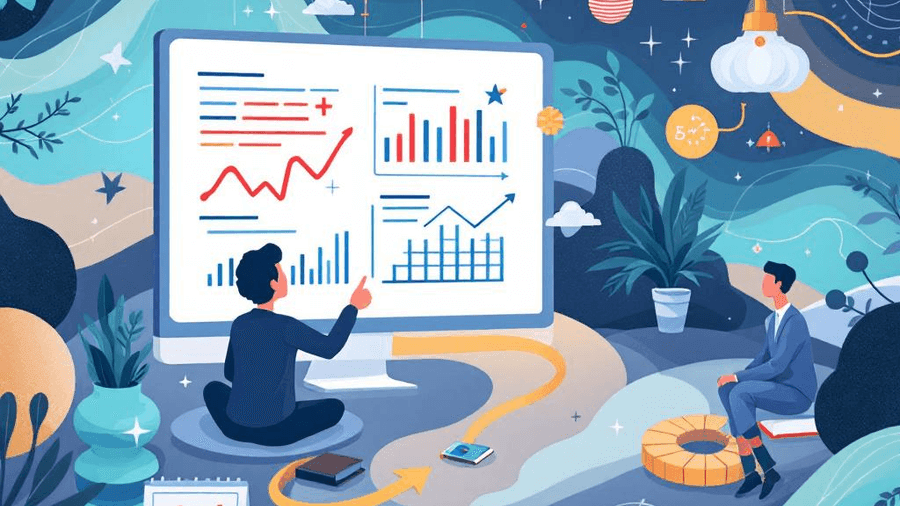
Not because they’d been laid off; most still had jobs. The problem was that nobody had figured out what those jobs were anymore. Analysts spent their days doing QA on AI outputs, flagging anomalies they didn’t have the context to interpret, and waiting for someone to tell them what questions to ask next. The technology had worked. The workforce planning had not.
This is the failure mode that doesn’t make headlines. The AI future-of-work conversation fixates on displacement—which roles disappear and which survive—but that framing leads organizations to ask the wrong question. The more precise question, and the more actionable one, is: which decisions will AI own, and which will humans be accountable for? That shift changes everything about how you plan, what you build, and what you hire for.
What AI Is Actually Replacing
The unit of displacement isn’t jobs; it’s tasks. That distinction sounds academic until you realize that most roles are bundles of tasks with very different automation profiles. When you pull the automatable ones out, what remains is often unrecognizable.
Three categories typically respond differently to automation:
- Routine cognitive tasks—data entry, report generation, basic classification, document summarization—have high automation potential right now with current tooling.
- Judgment-dependent tasks—risk assessment, novel problem-solving, decisions with incomplete information—are where AI often assists but humans decide; the model surfaces options, a person owns the call.
- Relational and contextual tasks—negotiation, team leadership, ethical oversight, reading a room—sit at the margins of what AI can meaningfully augment.
For builders, this taxonomy serves as a deployment map. It tells you where to automate fully, where to build AI-assisted tooling with a deliberate human loop, and where to leave the workflow mostly intact. For decision-makers, it’s a diagnostic: look at any role on your org chart and ask which layer you’ve automated, which you’ve left alone, and whether the people in that role are equipped for what’s left.
There’s a compounding effect worth naming. When you automate the routine cognitive layer, you surface the judgment layer faster. Workers either rise to it or stall. Organizations that don’t redesign roles around this acceleration often end up with the logistics company’s problem: technically capable people doing work that’s beneath the capability AI just created room for.
The Roles Feeling It First

Data analysts and BI professionals are among the clearest current examples. AI handles query generation and pattern detection; the role is shifting toward interpretation, storytelling, and knowing which questions are worth asking. Organizations that don’t make this explicit often end up with analysts running QA on model outputs, a use of human capability that may also produce less effective decisions than having someone genuinely engaged with the problem.
Customer-facing roles are being restructured from the bottom up. AI handles tier-1 support resolution and lead qualification with reasonable accuracy in many cases; humans are being pushed into complex escalations and relationship management. That sounds like an upgrade, but it typically requires emotional intelligence and product depth that wasn’t previously screened for in hiring. The job changed; the job description often hasn’t.
Software engineers are experiencing compression at the junior end. AI-assisted coding tools are shrinking the time to produce working code, which means the bottleneck has shifted from writing to reviewing, architecting, and prompting well. Entry-level now means something different than it did three years ago; skills that used to take two years of on-the-job development are increasingly being skipped, which may have real implications for how you build a talent pipeline. Research from MIT’s Work of the Future initiative tracks this compression across technical roles and suggests the effects are most acute in the first two years of a career.
Operations and logistics planners find AI optimizing the routine: routing, inventory, scheduling. Human value often concentrates in exception handling and supplier relationship nuance, situations where the model’s training data may not cover actual circumstances. One counterintuitive effect: some of these roles are expanding in complexity because AI surfaces edge cases that humans previously rarely encountered. The job gets harder in ways that weren’t anticipated.
The Augmentation Trap
The assumption embedded in most AI deployment plans is that human plus AI will outperform either alone. That’s often true in controlled conditions; it’s frequently false in practice. The gap is almost never about the model’s capability. It’s typically about whether anyone designed the human-AI interface deliberately.
Two failure modes show up repeatedly. The first is over-reliance: humans may defer to AI outputs without sufficient skepticism, especially in high-stakes domains. Medical triage, credit decisions, legal analysis—these are areas where uncritical acceptance can carry real costs, and where the danger isn’t that the AI is wrong constantly but that it’s wrong in ways that are hard to spot without domain expertise. Judgment can atrophy through disuse, and the humans nominally in the loop may stop functioning as a genuine check.
The second failure mode is under-integration: workers often treat AI as an optional add-on and revert to prior workflows under pressure. The tool gets enthusiastic adoption in demos and pilots, then frequently disappears from daily practice when deadlines hit and cognitive load spikes. This usually signals that the tool was placed adjacent to the actual workflow rather than integrated into it.
Good augmentation requires a clear answer to a specific question: is the AI output input to a human decision, or is it the decision? Organizations frequently blur this distinction, and the blurring creates accountability gaps. When something goes wrong—a bad loan, a misdiagnosed case, a failed project—it may be difficult to reconstruct whether the human reviewed the AI output or simply ratified it.
If you’re building AI systems for internal or external deployment, the UX of the human-AI handoff is not a product detail. It is a workforce architecture decision. Where your output becomes someone’s decision is where your design responsibility is highest.
What Organizations Need to Build
The instinct is to solve this with training. Run a reskilling program, certify people on the new tools, move on. That approach often falls short, not because training is useless, but because AI capability is moving faster than curriculum cycles. A program designed around current tooling may become outdated before it’s complete.
What tends to work better is building internal learning loops: teams that regularly audit which tasks AI has absorbed and deliberately practice the judgment skills that remain. A financial services firm running this well does quarterly role audits, mapping what AI now handles versus six months ago, then adjusting team charters accordingly. It’s not glamorous organizational design, but it keeps human capability development connected to actual workflow changes rather than trailing them by 18 months.
Workforce adaptation is also, fundamentally, an organizational design problem, not an HR initiative. One practical tool is a decision ownership matrix: for each major workflow, map whether each key decision is AI-generated, human-reviewed, or human-owned. This gives managers a concrete artifact for defining what their team is accountable for post-automation. It also makes visible the decisions that have quietly migrated to AI without anyone explicitly choosing that.
AI fluency needs to be built differently at different levels. Decision-makers need enough fluency to evaluate AI claims, set appropriate guardrails, and recognize when a vendor may be overselling; they don’t need to build models. Builders need to understand the organizational context their tools will land in—the incentive structures, the skill gaps, the workflows—not just the technical specs. The most neglected layer is the middle: team leads and product managers who are often the actual translators between technical capability and organizational practice. They’re frequently deciding, in real time, how much to trust an AI output, and they’re often the least equipped to make that call well.
The Next 24 Months
Near-term, AI tooling is likely to consolidate inside existing platforms rather than arrive as standalone products. Microsoft, Salesforce, Google, and others are embedding AI into tools workers already use, which means adoption will probably accelerate without workers explicitly choosing it. Workforce adaptation strategies need to account for AI that wasn’t deliberately adopted; the invisible deployment problem is real, and it’s likely to grow.
The 12-to-24-month window is where organizational investment decisions made now may start to show returns. Organizations that invested in role redesign, decision ownership clarity, and genuine human-AI workflow integration are likely to have a structural advantage, not because they have better models, but because their people know how to work alongside them. The model is increasingly a commodity; the integration capability is not.
Regulatory pressure is also becoming a workforce design constraint, not just a compliance consideration. The EU AI Act, now in phased enforcement, pushes certain industries toward mandatory human oversight requirements for high-risk AI applications. That means some roles will need to be explicitly designed around oversight functions, with the skills and time to perform them genuinely rather than nominally.
What You Should Do With This
Organizations that navigate the AI future of work well won’t necessarily have the best models. They’ll have the clearest answer to a harder question: what are we asking humans to be responsible for, and are we building the conditions for them to do that well?
The unit of analysis isn’t jobs; it’s decision ownership. AI capability is becoming a commodity faster than most organizations realize. The ability to integrate it into coherent human workflows, with clear accountability and genuine judgment at the right points, is not.
If you’re building: before you ship, map the human-AI handoff in your system. Where does your output become someone’s decision? Design for that moment with the same rigor you’d apply to any other high-stakes interface.
If you’re deciding: run one role audit this quarter. Pick one team, map what AI now handles that it didn’t six months ago, and explicitly redesign what those people are accountable for. Not what they do; what they own.
Enjoyed this artificial intelligence article?
Get practical insights like this delivered to your inbox.
Subscribe for Free